The Ultimate Guide to Email Deliverability in 2026
Why Your Emails Go to Spam — and How to Fix SPF, DKIM, and DMARC. Learn why emails fail and how to stay inbox-ready.
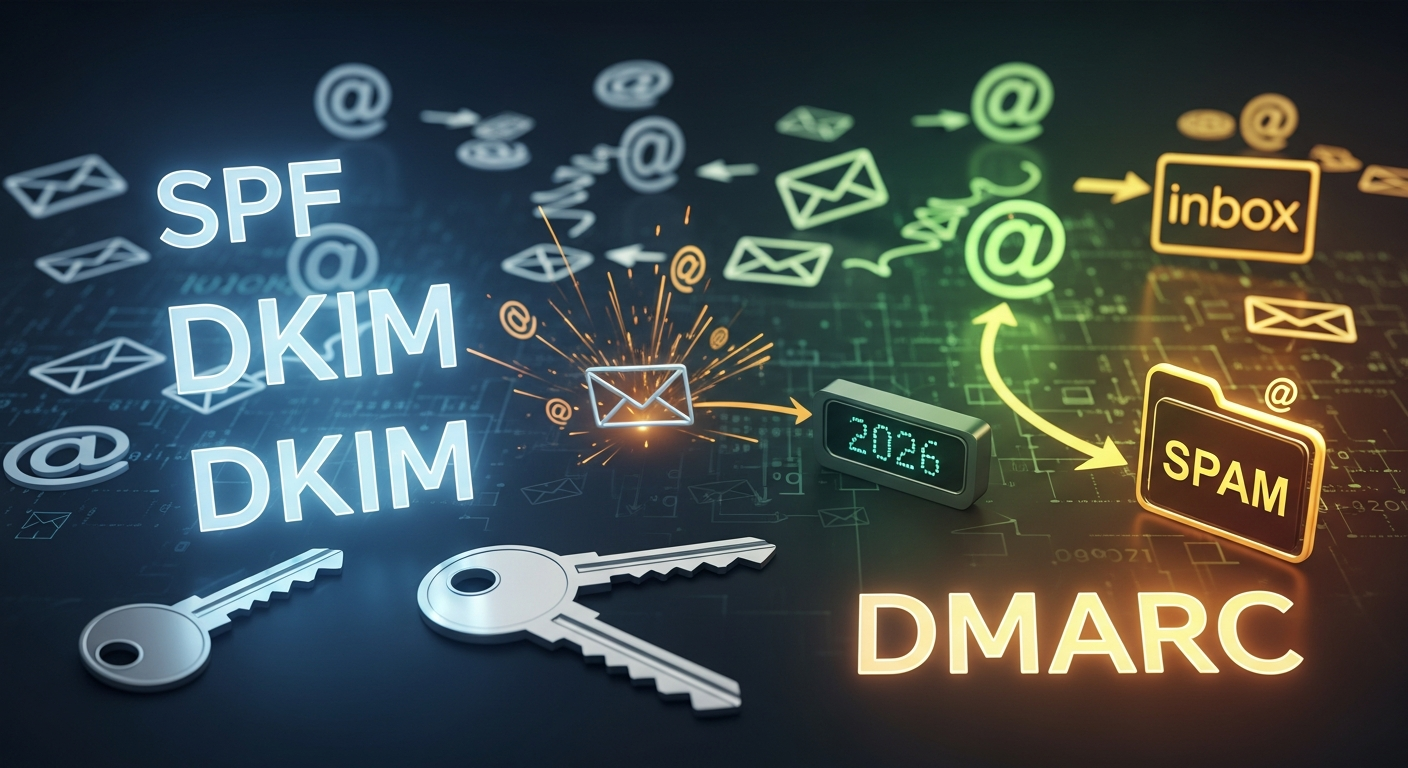
Why Your Emails Go to Spam — and How to Fix SPF, DKIM, and DMARC
Email deliverability in 2026 is no longer just about sending emails — it’s about proving your legitimacy to mailbox providers. If your emails are landing in spam (or not landing at all), authentication failures are the #1 reason.
This guide explains why emails fail, how SPF, DKIM, and DMARC actually work, and what you must do to stay inbox-ready in 2026.
What Is Email Deliverability?
Email deliverability is the ability of your emails to reach the recipient’s inbox, not spam or promotions.
In 2026, inbox placement is influenced by:
- Domain authentication
- Sender reputation
- Engagement signals
- Infrastructure hygiene
- Policy enforcement by mailbox providers
Simply “sending” an email successfully does not mean it was delivered.
Why Emails Go to Spam in 2026
Here are the most common reasons emails fail today:
1. Missing or Misconfigured Authentication
If SPF, DKIM, or DMARC are missing or broken, providers assume your email could be spoofed.
2. DMARC Policy Not Enforced
A p=none DMARC policy tells providers you’re monitoring, not protecting.
3. Domain Reputation Issues
Sending from new domains, shared IPs, or previously abused domains lowers trust.
4. High Complaint or Bounce Rates
Spam complaints and invalid recipients damage your sender score fast.
SPF, DKIM, and DMARC Explained (Without the Confusion)
SPF (Sender Policy Framework)
SPF defines which servers are allowed to send emails for your domain. If your email is sent from an unauthorized server → SPF fails.
Best practice 2026:
- One SPF record only
- Less than 10 DNS lookups
- Include all vendors (Google, Microsoft, SMTP relays)
DKIM (DomainKeys Identified Mail)
DKIM adds a cryptographic signature to every email. This proves the email wasn’t modified and truly came from your domain.
Best practice 2026:
- Use 2048-bit keys
- Rotate DKIM keys annually
- One DKIM selector per sending source
DMARC (Domain-based Message Authentication, Reporting & Conformance)
DMARC ties SPF and DKIM together and tells providers what to do if authentication fails.
Example: v=DMARC1; p=quarantine; rua=mailto:dmarc@yourdomain.com
Best practice 2026:
- Move from p=none → p=quarantine → p=reject
- Monitor aggregate reports weekly
- Enforce alignment (relaxed → strict)
The 2026 Deliverability Checklist
Before sending emails at scale, ensure:
- SPF passes
- DKIM passes
- DMARC enforced
- Reverse DNS configured
- TLS enabled
- Bounce handling enabled
- Complaint feedback loops active
Inbox placement is now earned, not assumed.
Final Thoughts
In 2026, email deliverability is a security and trust problem, not a marketing trick. If your domain isn’t authenticated and protected, mailbox providers will treat your emails as a liability.
Inbox success starts with authentication.
Written by Abhinay
Founder & Email Infrastructure Engineer at MXSentin
Passionate about email deliverability, server infrastructure, and building high-performance systems. Helping founders and agencies protect their domain reputation.