DMARC Monitoring Guide: Improve Email Security & Deliverability
Learn how DMARC monitoring improves email security, prevents domain spoofing, and strengthens deliverability with proper authentication alignment.
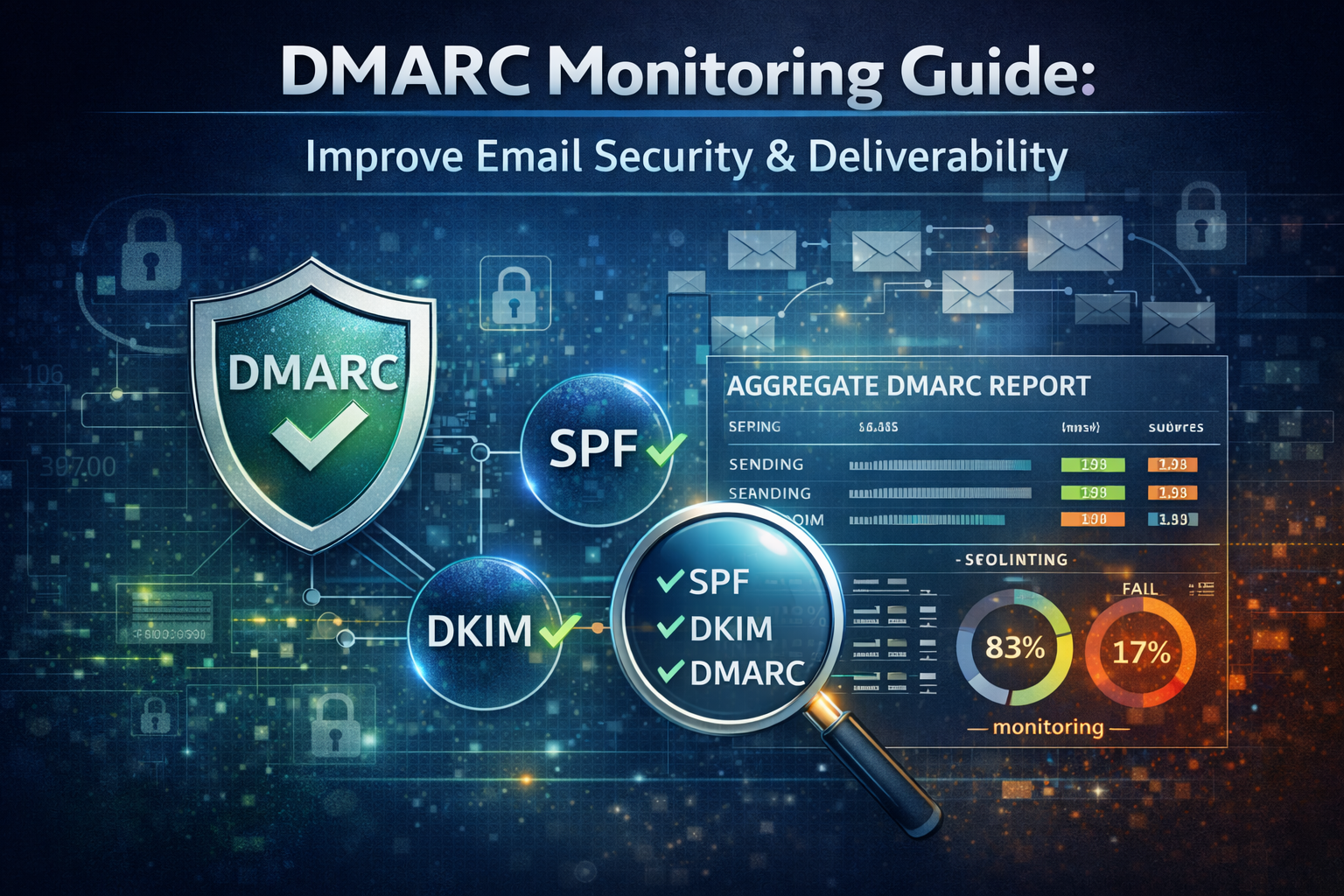
DMARC Monitoring Guide: Improve Email Security & Deliverability
DMARC monitoring is no longer optional for businesses sending bulk email. It directly impacts email security, domain spoofing protection, and inbox placement.
Publishing a DMARC record without analyzing DMARC reports leaves your domain exposed to authentication failures and abuse. MXSentin transforms complex DMARC data into actionable intelligence.
Why DMARC Monitoring Is Now a Business Requirement
DMARC was once optional. Today, it’s enforced by major mailbox providers for bulk senders. But here’s the problem: Most companies publish a DMARC record and never look at the reports. That’s like installing CCTV cameras and never checking the footage.
What DMARC Reports Actually Reveal
When MXSentin processes DMARC reports, we typically uncover:
- Shadow SaaS tools sending on behalf of your domain.
- Marketing platforms with misaligned DKIM.
- Forwarding issues breaking SPF alignment.
- Unauthorized IPs attempting spoofing.
- Geographic abuse patterns.
Without visibility, these go unnoticed.
The Cost of Staying at p=none
Many domains remain at monitoring mode (p=none) forever. The risks include easier brand spoofing, lower trust signals to Gmail, reduced protection against phishing, and missed reputation enforcement.
MXSentin helps you:
- Analyze aggregate (RUA) data clearly.
- Understand alignment failures.
- Transition safely to quarantine.
- Enforce reject when ready.
You shouldn’t guess when to enforce DMARC. You should have data.
Deliverability and Security Now Share the Same Foundation
DMARC is no longer just about anti-spoofing. It directly impacts inbox placement, domain trust scoring, brand credibility, and customer confidence.
MXSentin connects security insights with deliverability performance — so your marketing team and IT team operate on the same data.
Frequently Asked Questions
How often should I monitor DMARC reports?
Ideally, you should monitor them weekly. Automated tools like MXSentin digest these daily so you get alerted only when issues arise.
What is the difference between p=none, p=quarantine, and p=reject?
p=none is monitoring only (no action taken). p=quarantine sends failing emails to spam. p=reject blocks failing emails entirely, offering the highest protection.
For a broader look at securing your infrastructure, read our article on Email Security Best Practices.
Written by Abhinay
Founder & Email Infrastructure Engineer at MXSentin
Passionate about email deliverability, server infrastructure, and building high-performance systems. Helping founders and agencies protect their domain reputation.